Terramation Services in Georgia
Starting at $8,995
A Meaningful Return to Nature
Terramation, also known as Human Organic Reduction, offers another way to honor a life while returning to the earth. Georgia Funeral Care can help you understand this option, explore your wishes and coordinate the arrangements. Below, you’ll find information about the process and answers to questions families often ask.onment, and a FAQ section with answers to many common questions.
Understanding Terramation
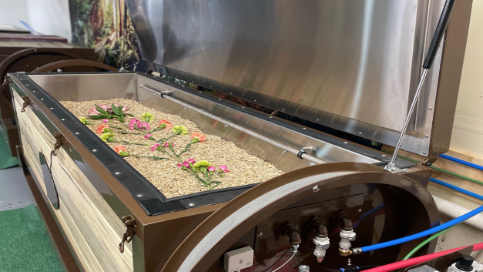
Terramation uses naturally occurring biological activity to transform a body into soil. It takes place in a controlled environment, where plant materials and beneficial microbes support the transformation over several weeks, followed by a period of curing.
For someone who feels connected to nature, Terramation may reflect the way they lived and the legacy they wish to leave. Our team can talk through what it involves and help you consider whether it fits your wishes.
How the Process Works
Before Terramation begins, your family may choose to spend time with your loved one or hold a farewell gathering. Georgia Funeral Care will help you explore those options and coordinate the arrangements.
During the process, your loved one is placed in a specialized vessel with natural materials such as wood chips, alfalfa and straw. Carefully managed conditions support the microbes that gradually transform the body and surrounding materials into soil.
The soil then undergoes a curing period before it is ready for its intended use. Our team will explain the anticipated timeline and discuss the available options for receiving or placing the soil.
Why It's Green and Eco-Friendly
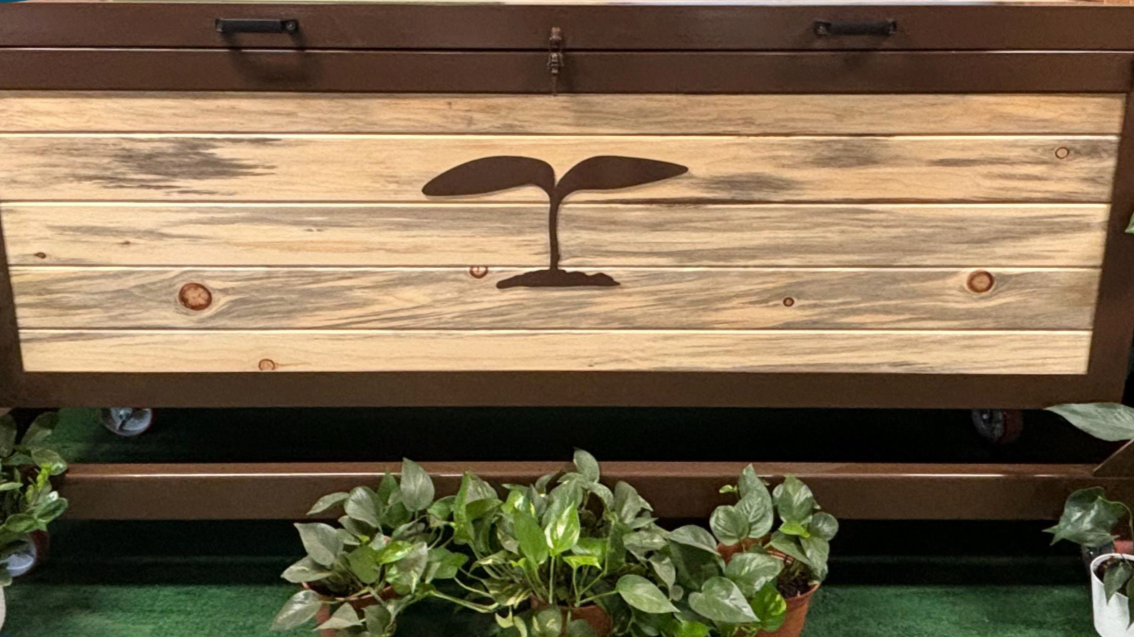
Terramation supports natural transformation without the flame used in conventional cremation. It also avoids the need for a burial vault or conventional burial casket as part of the process.
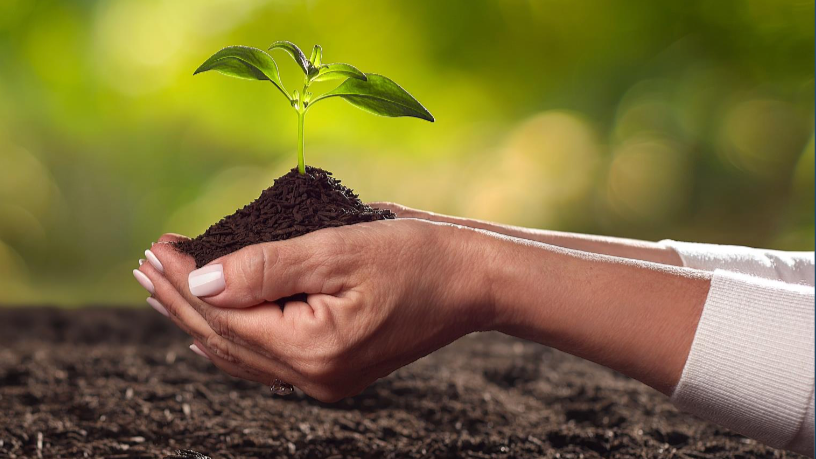
The resulting soil can support plants and trees, offering a connection between remembrance and new growth. If caring for the environment is part of your wishes, Georgia Funeral Care can help you explore Terramation alongside other available options.
Explore Terramation with Our Team
You don’t need to have every decision made before contacting us. Whether you’re planning ahead or someone has died, Georgia Funeral Care can answer your questions and explain how to begin.
Complete the form below or call 678-574-3016 to speak with our team.
Terramation Services
We will get back to you as soon as possible.
Please try again later.
Frequently Asked Questions
Click on the questions below to reveal each respective answer.
-
Is Terramation suitable for everyone?
The Terramation process destroys most harmful pathogens. There are three rare diseases that disqualify a body from undergoing Terramation: Ebola, prior diseases such as Creutzfeldt-Jakob Disease, and active Tuberculosis.
Monitoring for these diseases is the responsibility of hospitals and medical examiners. For patients who have received radiation seed implants, the seeds must be removed and 30 days must pass before they are eligible for Terramation.
Most full body donations to science or medical research are embalmed and so are not eligible for Terramation. A person can be an organ donor and still choose Terramation.
-
Can someone who donates their body to science still choose Terramation?
In most instances, full body donation and Terramation are not compatible. Bodies donated to medical schools and research projects are usually embalmed to extend the time during which they can be studied. Bodies that are embalmed cannot undergo Terramation.
A person can be an organ donor and still choose Terramation.
-
Can you be an organ donor and still choose Terramation
Yes, you can donate your organs and choose Terramation.
Organs will be removed by medical professionals at the time of death. We will coordinate the transportation of the body back to the funeral home once organ donation is complete.
-
Do you fulfill religious-based needs and requests?
Yes, we value diversity in cultural and faith traditions and will work with you to accommodate and celebrate your customs.
-
How much soil is created with Terramation?
The process creates approximately 300 to 400 pounds of soil. When bagged, the soil can be transported easily.
Families can take some or all of the soil home once the process is complete, and donate what does not go home to conservation efforts.
-
How does water cremation compare to Terramation
Like Terramation, alkaline hydrolysis—also called water cremation, resomation, or aquamation—is a process for transforming a body after death. Alkaline hydrolysis takes place in a pressurized vessel filled with water and potassium hydroxide, which transforms the body into a sand-like material.
In contrast, Terramation takes place in a closed, reusable vessel. Terramation creates an environment in which beneficial microbes thrive, with a specific moisture content and ratio of carbon and nitrogen materials.
Alkaline hydrolysis has some of the same environmental benefits as Terramation. Both processes are part of a worldwide movement to make death care practices less harmful—and ideally beneficial—to the planet.
-
How does Terramation compare to Green Burial?
Terramation takes place in a closed, reusable vessel while green burial refers to the practice of burying an unembalmed body in a designated green burial cemetery with a simple casket or shroud. Both Terramation and green burial encourage natural transformation of the body.
Terramation is not a type of burial because the body is not placed in the ground. The Terramation process creates an environment in which beneficial microbes thrive, with a specific moisture content and ratio of carbon and nitrogen materials. The molecular processes that power Terramation are the same processes that break down a body during green burial. However, these processes typically take much longer in a green burial context. This is partly because not as much oxygen reaches a body that has been buried underground.
Conceptually, both green burial and Terramation return a body to the earth. Both processes are part of a worldwide movement to make death care practices less harmful—and ideally beneficial—to the planet.
-
Why is Terramation more eco-friendly than burial or cremation?
Terramation is a more environmentally-friendly option than burial or cremation. This is because the process does not use fossil fuel like cremation, does not require the casket and cemetery resources of burial, and sequesters carbon as soil is created. As the nutrients in the compost are used over time by the plants in contact with it, the impact of a person’s choice for Terramation continues to expand exponentially.
-
How can Terramation soil be used?
The soil created by Terramation is biologically valuable material that can be used to nourish trees and plants. It can be used in yards, flower gardens, trees, house plants, and in natural environments. It has a balanced nutrient content with a good supply of macronutrients.
Families may use their person’s soil to create groves of trees, nourish rose gardens tended by their person while they were alive, or scattered in a favorite natural area.
-
How does Terramation reduce your carbon footprint?
Terramation saves carbon through a combination of factors. The process uses 87% less energy than cremation, which typically uses fossil fuel to create sustained heat of over 1,600 degrees Fahrenheit for 3 to 4 hours.
No casket or coffin is used during Terramation, nor is a concrete grave liner required – all items that add to the carbon footprint.
When Terramation gently transforms the organic material of our bodies, the carbon is captured, or sequestered, in the soil created. Rather than being released as carbon dioxide gas through exhaust during a cremation or as a hydrocarbon gas like methane, the carbon contained in each body returns to the earth. As the nutrients in the soil are used over time by the plants in contact with it, the impact of a person’s choice for Terramation continues to expand exponentially.
Do you have more questions?